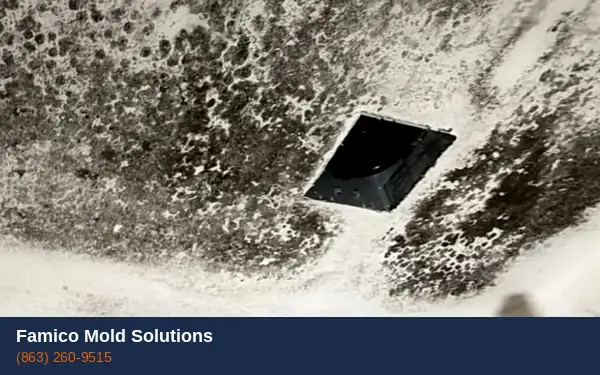
Mold remediation vs. mold removal — what is the difference
Mold removal refers to physically taking mold out of a space. Mold remediation is the full professional process — assessment, containment, removal, treatment, verification, and clearance. Remediation addresses both the mold and the conditions that allowed it to grow. Removal without remediation almost always leads to mold returning.
Famico Mold Solutions performs full mold remediation following the IICRC S520 Standard for Professional Mold Remediation. This is the industry's governing standard for certified remediators. Every step we take — from containment setup to post-remediation air testing — follows S520 protocol.
Our mold remediation process
- Step 1 — Assessment: Moisture meters, thermal imaging, and air sampling identify all mold-affected areas and the moisture source driving growth.
- Step 2 — Containment: We seal the work area with polyethylene sheeting and run negative air pressure machines. Air inside the containment zone exhausts outside, preventing spores from reaching clean areas.
- Step 3 — HEPA air filtration: HEPA air scrubbers run continuously throughout the job, capturing mold spores down to 0.3 microns from the work zone air.
- Step 4 — Physical removal: Affected drywall, insulation, wood, and other porous materials are removed, double-bagged in polyethylene, and disposed of properly. Non-porous surfaces are HEPA vacuumed and wiped.
- Step 5 — Antimicrobial treatment: EPA-approved antimicrobial solution is applied to all surfaces in the work zone. This kills any remaining mold spores and inhibits regrowth.
- Step 6 — Moisture source correction: We address the moisture source — the leaking pipe, the AC drain, the roof penetration — so the mold cannot return.
- Step 7 — Post-remediation verification: A final air test confirms spore counts have returned to normal levels. The written clearance report from our accredited lab documents the result.
When does remediation require a licensed contractor in Florida
Florida Statute 468 Part XVI requires that mold remediators hold a state license for commercial mold remediation work. For residential work, professional certification is strongly recommended. Insurance companies increasingly require documentation of certified remediator involvement to process mold claims. Famico operates to professional standards on every residential and commercial job.
The IICRC S520 is the industry reference standard for professional mold remediation. It defines containment levels, clearance criteria, and documentation requirements. Work performed to S520 standards is what insurance adjusters and legal proceedings recognize as professional remediation.