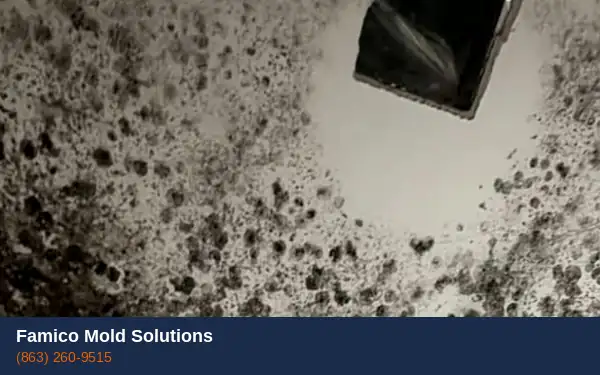
Why bathroom mold keeps coming back
Most Florida homeowners treat bathroom mold with bleach spray. Bleach kills surface mold but does not penetrate porous materials like grout, drywall, and wood. The mold root structure — called hyphae — stays inside the material. Within weeks, the mold resurfaces from the same root system. This cycle repeats until the source material is treated properly or removed.
Haines City's humidity makes bathroom mold worse than in drier climates. Your bathroom exhaust fan has to work much harder to lower humidity in a 74 percent ambient humidity environment. If the fan is undersized, runs for less than 30 minutes after a shower, or vents into the attic instead of outside, bathroom mold is almost inevitable.
Where we commonly find bathroom mold in Haines City
- Grout between tiles — especially in corners and floor-wall junctions
- Drywall behind the shower or tub surround — often invisible until tiles are removed
- Bathroom ceiling — rising steam collects at the ceiling and creates mold conditions
- Under the bathroom sink — slow drain line or supply line drips create persistent moisture
- Bathroom exhaust fan housing — mold grows inside the fan when it vents into the attic
- Around the toilet base — wax ring failures or slow tank condensation drips create floor mold
When to call a professional instead of using bleach
DIY bleach cleaning is appropriate for small surface areas of less than 10 square feet on non-porous tiles. Call a professional when the mold covers more than one wall, when you find mold growing on drywall or wood, when the mold returns within a few weeks of cleaning, or when family members have respiratory symptoms that improve when they leave the bathroom.
Standard bathroom tile surrounds are installed over moisture-resistant drywall — not cement board. When the grout or caulk fails, water enters behind the tiles and soaks the drywall for months before the tiles loosen. By the time you remove the tile, the drywall behind it is fully mold-colonized.